Inglis navigates a more selective Australian bloodstock market as buyers demand value, soundness and
nglis enters another demanding season with Australia’s thoroughbred market showing both resilience and caution. The century-old auction house remains a central meeting point for breeders, trainers, owners and international buyers。but the mood around Inglis is less exuberant than during the strongest post-pandemic sales. Buyers are still prepared to pay heavily for elite bloodlines, while middle-market yearlings are receiving far closer scrutiny. That split is shaping every major Inglis sale, from the Australian Easter Yearling Sale to the Premier and Classic auctions. A polished catalogue can attract attention, yet pedigree alone no longer guarantees a result. Buyers now arrive with veterinary reports, racing data and strict spending limits. Inglis has responded by refining digital bidding, expanding inspection information and placing greater emphasis on transparency. The changes are practical rather than dramatic, but they reflect a market that has become more selective and less willing to chase fashion without evidence.At the Riverside Stables complex in Warwick Farm, the atmosphere during a major Inglis sale can shift within minutes. A well-bred colt enters the ring and paddles rise quickly;a similar-looking yearling may struggle when the bidding opens. That contrast has become one of the clearest features of the Inglis calendar. Trainers with established owners behind them often pursue athletic individuals with commercial appeal, while smaller syndicates search for horses that offer a plausible route to affordability. Inglis auctioneers must manage both groups without allowing the room to lose momentum. Their role is part salesmanship, part crowd reading and part damage control when a lot fails to meet expectations. In conversations around the parade area, buyers often speak less about glamour and more about soundness。
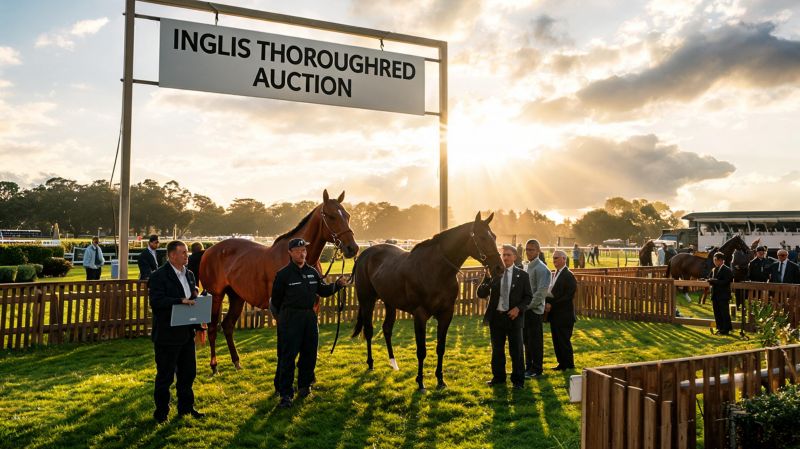
preparation and resale prospects. The old excitement remains, but it is now tempered by the cost of feed, transport, veterinary care and racehorse ownership.International participation continues to give Inglis an important advantage. Buyers from Hong Kong, Singapore, Japan and other racing jurisdictions regularly inspect Australian yearlings, attracted by the country’s depth of breeding and its established racing infrastructure. For Inglis。overseas demand provides a buffer when domestic spending weakens, although currency movements and travel costs can quickly alter purchasing plans. A bloodstock agent may enter the sales ring with instructions to secure one horse, then leave after several failed bids when prices rise beyond the client’s ceiling. That discipline is increasingly common. Inglis has also benefited from the growing use of online platforms, which allow clients to follow inspections and bid remotely when they cannot attend in person. Digital access broadens the audience, but it does not eliminate the importance of physical evaluation. Experienced buyers still want to see a yearling walk, assess its balance and watch how it behaves under pressure.The wider Australian breeding industry is watching the performance of Inglis closely because auction results influence decisions far beyond sale day. Strong clearances encourage breeders to retain mares。invest in stallions and prepare larger drafts for the following season. Softer trade can produce the opposite response, particularly among smaller operators carrying rising land and labour costs. Inglis therefore functions as more than an auctioneer;it is also a public measure of confidence in the national racing economy. Recent sales have shown that demand remains concentrated around proven families, fashionable sires and athletic individuals with clean veterinary histories. That pattern rewards large commercial breeders with deep resources, while smaller breeders must rely on careful mating plans and patient preparation. From the buyer’s side, the calculation is equally sharp. A purchase must satisfy the eye, survive veterinary examination and still make financial sense once training bills begin.Inglis is unlikely to abandon the traditions that made its name。
and that may be its strongest asset. The theatre of a live auction still creates urgency that a spreadsheet cannot reproduce. Yet Inglis also faces pressure to make the process easier to understand for new owners, especially younger investors entering racing through partnerships and micro-syndicates. Clearer data, better communication and realistic pricing could help broaden that audience. My impression from recent market conversations is that confidence has not disappeared;it has become conditional. Buyers will spend when they believe a horse has genuine athletic and commercial potential, but they are less inclined to follow a crowd simply because a catalogue page looks impressive. Inglis sits at the centre of that adjustment. Its next challenge will be balancing the drama of premium bloodstock with the quieter, harder work of building trust across every level of the market.